Sealed & restored across South Florida
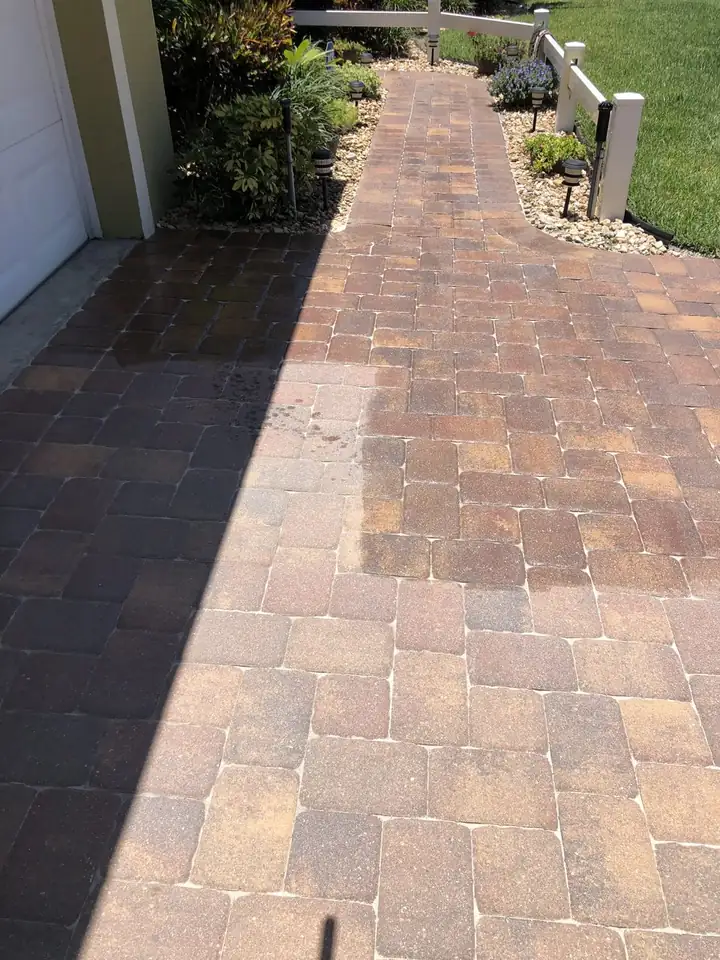
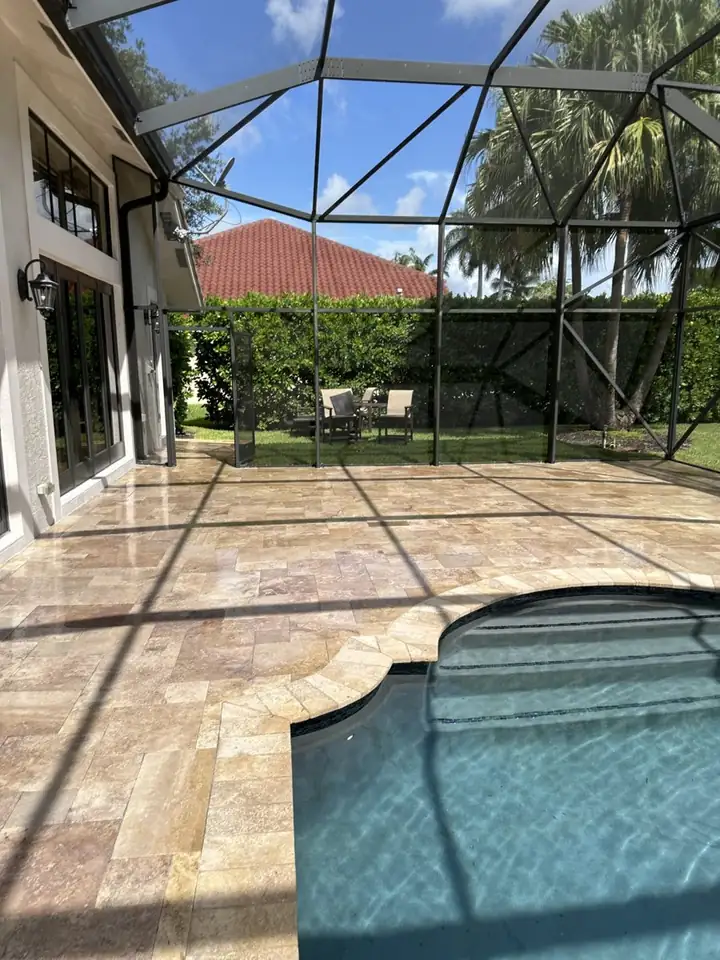
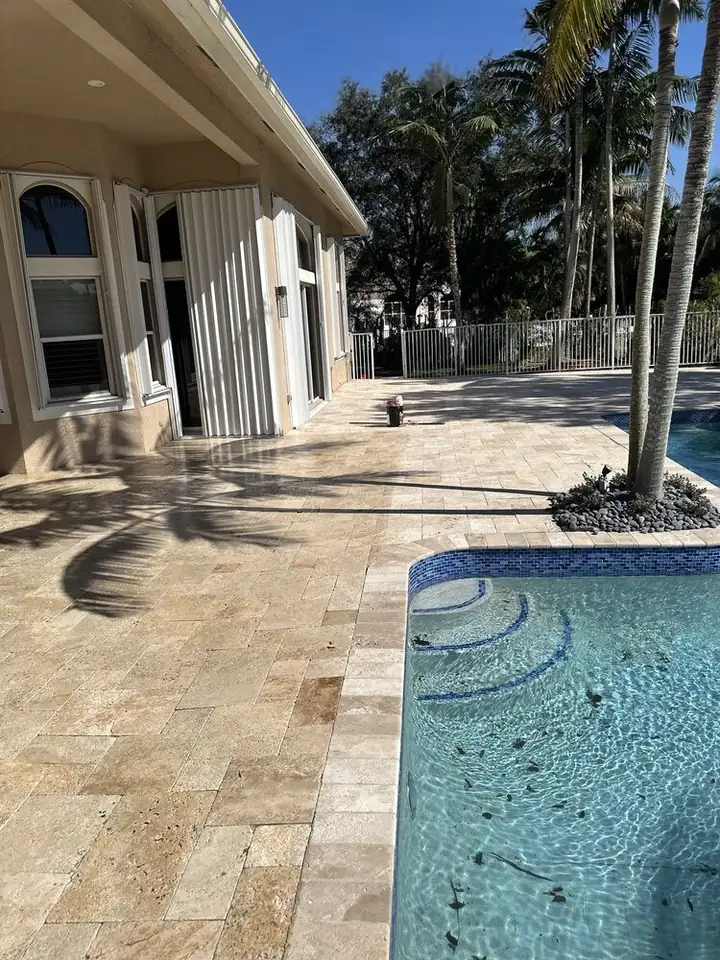
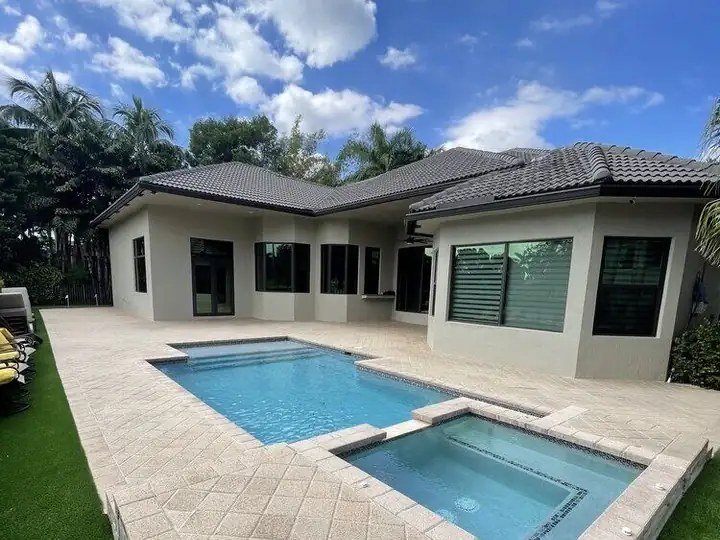
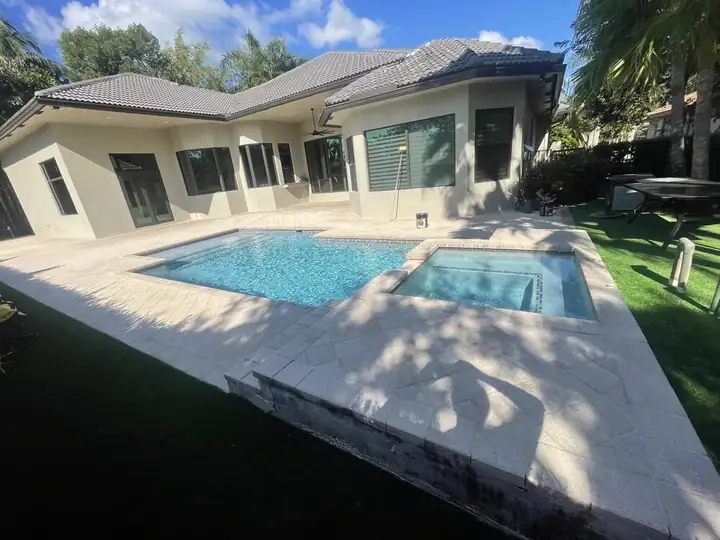
Drag the slider — the same pool deck, before and after sealing. Below: more decks, patios, walkways, and driveways we've sealed across South Florida.
 BEFOREAFTER
Restore the color. Protect the investment. Done the right way, over several days.
Free quotes, usually within the hour · or call/text (954) 389-2642After decades sealing South Florida pavers, marble, travertine, and more, we've learned there are no shortcuts to doing it right. Sealing isn't a one-afternoon job — it's a careful, multi-day process, and every step matters. Here's exactly how we do it.
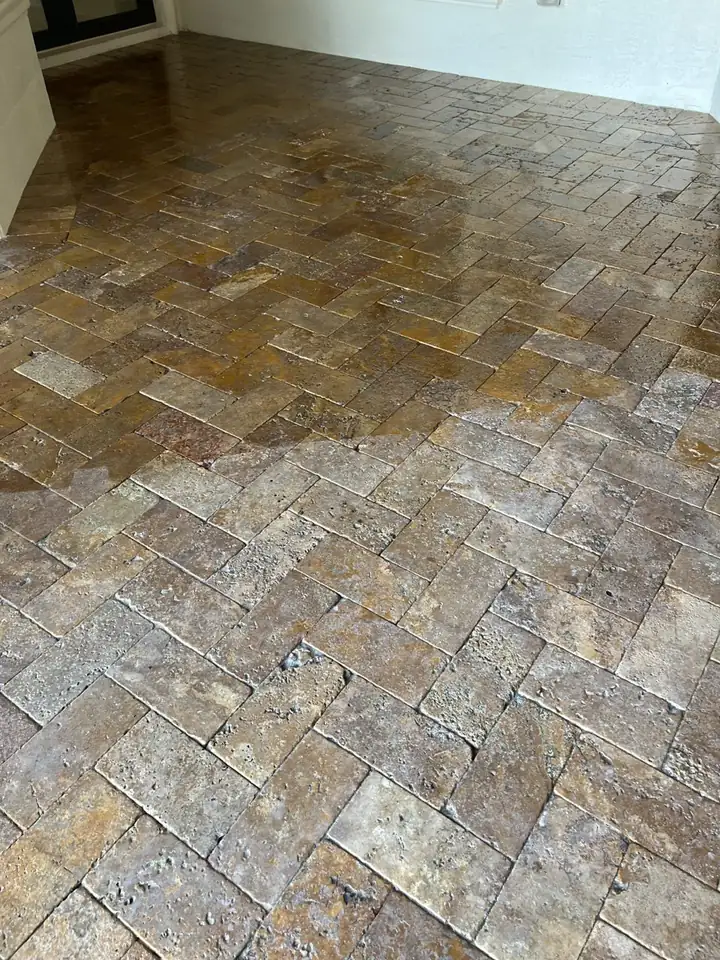
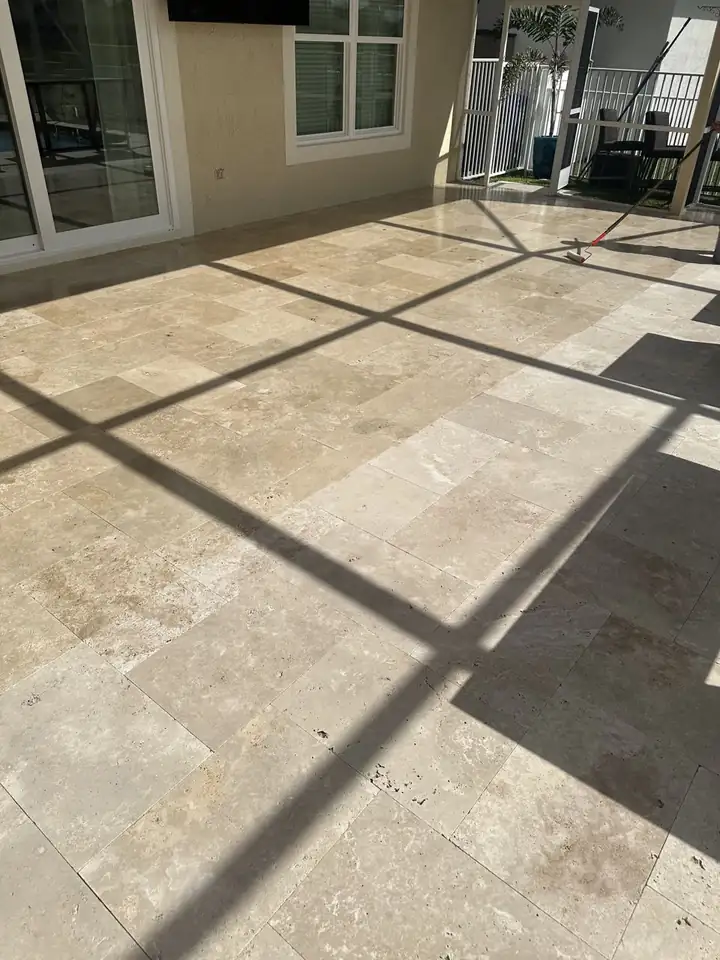
We seal most outdoor hardscape surfaces — pavers, marble, travertine, and similar stone and tile. (We can seal concrete as well, though it's a less common request.) If you're not sure whether your surface can be sealed, just ask — after three decades we've seen just about everything South Florida has.
Clean, sand, seal — each with its own day and proper dry time. Weather-dependent from start to finish.
Before we start, we need a blank canvas. We'll move furniture, planters, and anything else off the surface so we can clean every inch — and if you're able to clear it ahead of our arrival, it's always appreciated and helps the day go faster.
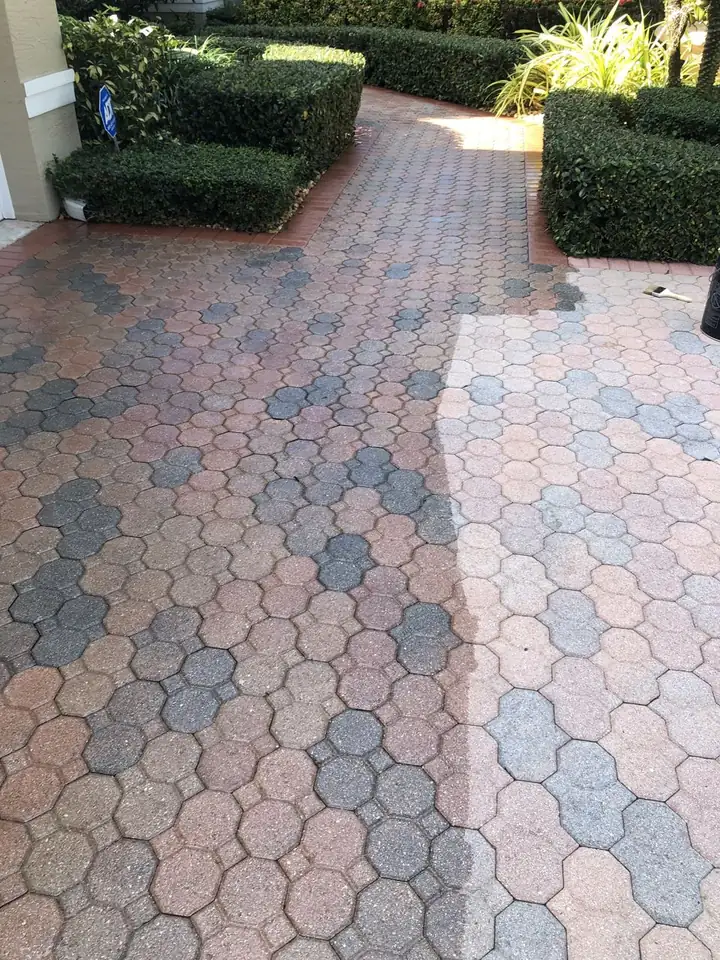
Everything starts with a thorough deep cleaning. For pavers especially, that means working the dirt out from between every joint and removing the weeds growing in them — not just rinsing the surface. We use a cleaning solution that's tough on grime but gentle on your surrounding grass and plants. Once the surface is clean, we go back over any stubborn weeds until they're virtually all gone, and blow off any loose leaves and debris.
Then it needs to dry. We give the surface a full day before moving on — and the whole process is weather-dependent from here, so we plan around South Florida's rain.
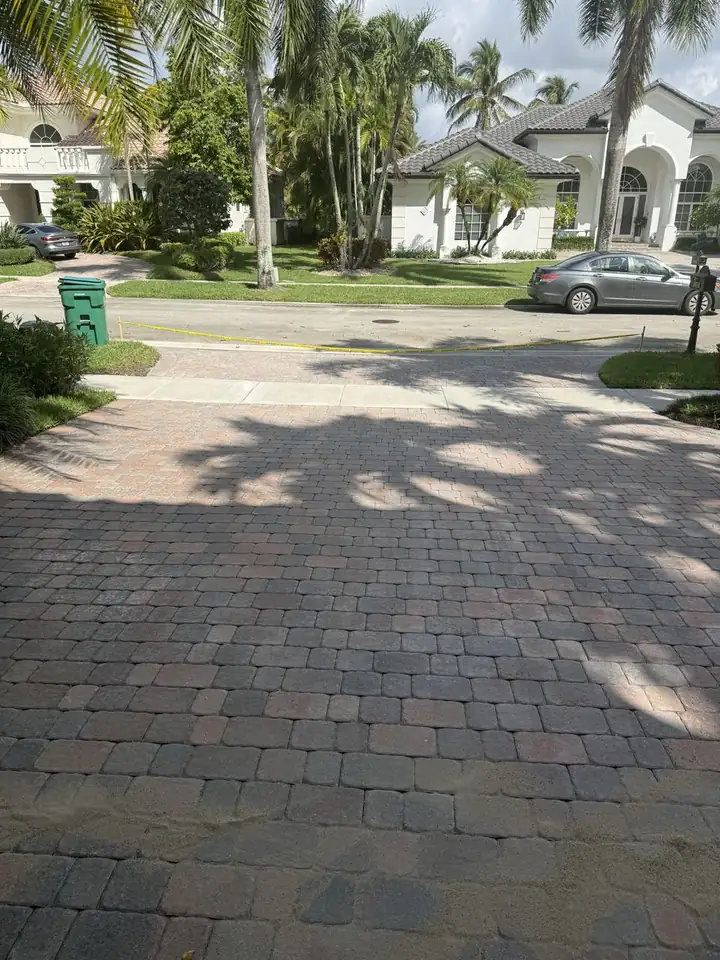
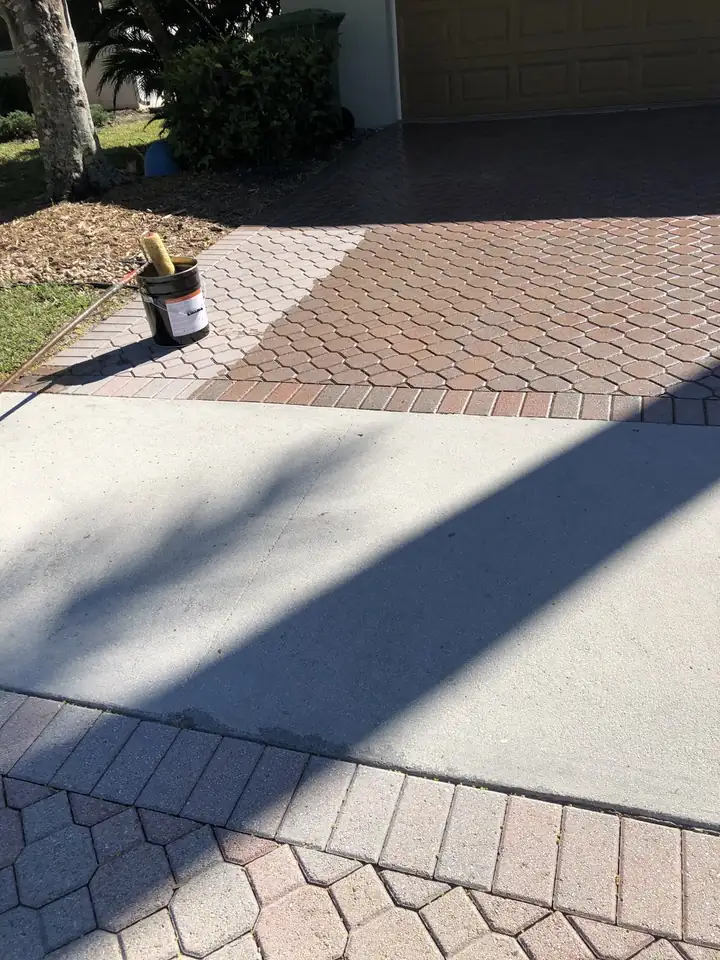
Right after cleaning, we put up caution ribbon and stakes on driveways. We don't want anyone — including you — driving on the freshly cleaned surface and leaving tire or dirt marks before we've finished. Protecting the clean is part of the job. (Patios don't get taped, since there's no vehicle traffic.)
When the job calls for it, we fill the joints with polymeric jointing sand — a material that hardens in place to lock the joints and help suppress weeds and ants. (Not every job needs it; some surfaces we go straight to sealing.)
We sweep the sand into every gap by hand with a broom, taking our time so each joint fills completely and none is left sitting on the paver faces. A light pass with a blower clears the loose material off the tops — gently, so it stays packed in the joints. Then we mist the whole surface with water several times so the sand sets, binds, and locks in. Done right, it looks clean and uniform, with no empty joints. Then it dries another day.
Finally, the sealant — applied by hand with rollers, one or two of our crew depending on the size of the job. We choose the right sealant for the conditions: a water-based sealant during the rainy season, and a premium solvent-based sealant when the weather's dry or in the winter months. The reason matters — choosing correctly for the forecast protects against hazing or whitening if rain comes before the sealant cures. After decades we know exactly which to use and when.
Both options bring out the rich, deep color of your pavers and add a protective layer that helps your surface last for years instead of months.
On patios — especially smoother surfaces like travertine and marble — sealer can get slippery when wet. So when slip is a concern, we mix in a non-slip additive to keep the surface safe underfoot. We use it on patios only, never driveways.
The caution ribbon and stakes stay up for about 48 hours after sealing. Car weight can leave grooves or tire marks in sealant that hasn't fully cured, so it's important to keep vehicles off. Light foot traffic is lower-risk, but we recommend keeping off it as much as possible. After about 48 hours, your surface is cured, ready to use, and done — clean, color-restored, sanded, and sealed.
We seal pavers all across Broward, Miami-Dade and Palm Beach — see what we handle in Weston, Davie, Pembroke Pines, Coral Springs, Plantation, Cooper City, Sunrise, Miramar, and Fort Lauderdale.
Sealing brings back the rich, deep color of your pavers — they look freshly laid again.
A sealed surface resists staining and wear, and holds its look for years instead of months.
The polymeric sand in the joints helps keep weeds and ants down and keeps the surface looking uniform.
It's the smartest thing you can do right after a cleaning — and our highest-rated service for a reason.
Drag the slider — the same pool deck, before and after sealing. Below: more decks, patios, walkways, and driveways we've sealed across South Florida.
BEFOREAFTERNo — that's the one rule of sealing. The pavers have to be deep-cleaned and fully dry before the sealant goes on. Seal over dirty pavers and you lock the dirt, algae, and old joint sand in. That's why we always do it as one project: clean first, dry, sand, then seal.
Years rather than months for most properties. Heavy sun and a lot of car traffic shorten it; shaded back patios and pool decks hold longer. We'll tell you straight at the next visit whether it's still holding or it's time for a refresh.
The sand between pavers is structural — it locks each paver against its neighbors so the surface doesn't shift, and it helps suppress weeds and ants in the joints. Polymeric sand hardens in place when it sets, so it stays put and looks clean and uniform.
Yes — same service, same multi-day process. Pool decks and patios are usually a bit more shaded, so they tend to hold longer. Walkways and entrance pavers we treat like driveways since they take the foot traffic.
Every surface is different, so we price each one — it depends on size, condition, and whether the joints need re-sanding. Quotes are free and usually back within the hour. Start your quote here or call (954) 389-2642.
Real customers, real reviews. We don't write these.
“Tyler and his Dad did an outstanding job pressure washing my driveway, and sealing it. They worked fast, but carefully. And I’d highly recommend. Jim N.”
Every surface is different, so we quote each one — free, fast, no obligation. Tell us about your space and we'll take it from there.